RPG Combat: Damage

I have some pretty strong ideas on how damage ought to be handled in a roleplaying game. But rather than complaining about how boring and unrealistic hit points are, I’ll simply present my current thinking on how I’m going to implement damage in my own game.

I am an unabashed violence monger (well, I might be slightly abashed depending on who I’m talking to), and I love the thrill of a good fight scene. I love knowing all the details of a strike in combat. When it’s my own character getting hit, I want to know exactly what happened to him so that I can imagine how he’s going to deal with it and where the scar will be. When it’s my character dealing out the hurt, I want to know exactly what he did so that I can picture how awesome he is. I want to be able to picture it all in my mind as if it were a movie.

But I also know that every increase in detail comes with a corresponding increase in how long it takes to play out the combat, and that often detracts from the excitement. In order to keep combat fast-paced and exciting, I’ve decided that the result of an attack roll should always translate directly into damage. There should be no extra rolling. The degree by which you succeed on the attack roll determines exactly how much damage you will do.

In my opinion, every strike that actually hits ought to have a concrete and dramatic impact on the fight. No successful blow should come without consequences. To keep things from getting bogged down, I envision four basic levels of damage that matter in the thick of a fight:
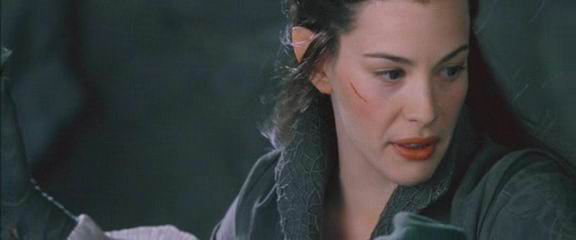
Arwen with scratch

  1. Glancing Blows. These are scratches and minor bruises, the type of stuff you don’t even feel in the rush of combat. They’re like the scratch that appears on Arwen’s cheek in The Fellowship of the Ring movie when she’s fleeing the Ringwraiths. It’s just enough to let you know that what you’re doing is dangerous. The fact that you took a scratch instead of getting killed serves to remind you of your badassness and your potentially imminent death at the same time.
  2. Minor Wounds. These are strikes that cause enough pain and damage to impair you, but won’t necessarily end the fight. They’ll probably cause a fairly high but momentary penalty due to the shock of getting your flesh torn up, then fade into a minor penalty after that. We don’t need to know the specifics; whether it’s a torn ligament, a damaged muscle, or a severed vein doesn’t really matter because those details don’t necessarily have a direct impact on the fight. All you know is that you got hit, and it hurts. Your doctor will figure out exactly what’s damaged and how to fix you up later. For now, you’ve got to fight through the pain and take out your opponent soon or else your pain penalties will eventually result in your demise. Minor wounds will comprise a fairly large range of possible results but will all have fairly similar and fairly low penalties.
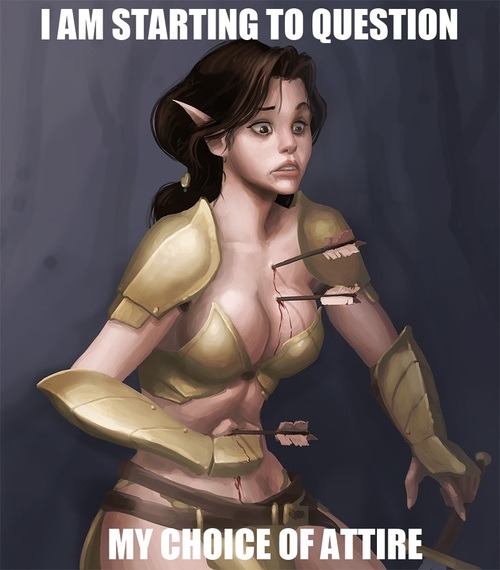
  3. Critical Wounds. This kind of wound doesn’t kill right away all on its own, but it’s essentially a fight finisher. A severed hand, a stab to the gut, or a shattered femur will put you into instant shock so that even if you keep hold of your weapon, you’re not likely to be able to do much with it. If your opponent is merciful and pauses to let you recover from the initial shock, you’ve probably got just one difficult shot left to strike back. Otherwise, you’ve lost, although you might live to fight another day if you have a good healer nearby.
  4. Death Blows. Some blows spell instant or near-instant death—decapitation, crushed skull, pierced lung. These are the kind of possibility that should keep you afraid of every combat you decide to enter. Unless you vastly outmatch your opponent, you’d better tread carefully. What might have been a glancing blow last time could just as easily have been a death blow if you hadn’t chosen your defense with care.

When appropriate, the exact results of the blow will be looked up on a wound chart. Glancing blows are incidental and don’t need to be looked up at all. The GM or the player can decide where the little scar will be, if they care. Minor wounds only need to be looked up after the fight is over, when the healer is examining the wound. The specifics only matter for the purposes of recovery. Critical wounds and death blows are both fight finishers and should be looked up right away unless the receiving character is unimportant cannon fodder. Since death blows mean that you’re dealing with a death scene, it ought to be imbued with an appropriate level of detail and drama. We need to know exactly what happened.

Wound charts should be detailed and specific to the type of attack being made (slashing, impaling, or crushing). Wounds are also dependent on the location being struck. In my system you will always choose the body part you’re aiming for, and the charts will need to reflect that. Such charts can be found in the excellent book Trauma by Claus Bernich or in the appendices to The Riddle of Steel (identical charts have been reused in the TROS derivative Blade of the Iron Throne).

In my system, each wound is unique and gets recorded on your character sheet separately. Wounds will have three primary characteristics: (1) a pain rating that gives a penalty to all actions involving the wounded location; (2) a blood loss rating that can result in death after a certain amount of time if left untreated; (3) unique effects that depend on the individual location (blindness, internal bleeding, concussion, loss of function). I have been thinking a lot about the role of healers in the game, as well (if I even have them). Detailed wounds could enable healing magic that’s more involved than simply healing hit points and could make things a lot more fun and interesting for people who want to play healers.

Since attack location is important, it also becomes important to keep track of what kind of armor you are wearing. A steel breastplate won’t protect you against attacks to the leg. This kind of detail can add a little extra work, but most of it occurs beforehand and is recorded on the character sheet before the fight begins. But keeping track of armor also adds an extra dimension of strategy to a fight, since you can target your enemy’s weak spots, and you have to be extra careful to protect your own.

What’s your opinion?

7 comments so far

  1. Claus | Wednesday, 27 February 2013, 3:25 am |

    Good post and many thanks for your kind comment on Trauma. Your thinking is very similar to my own thinking when designing the Fantasy Dice system for Crimson Exodus.

    No surprise that I agree with your thinking on having a high level of detail and realism post trauma, but keeping it fast to resolve with only a single roll and no tables or complicated rules during combat.It think your 4-level wound division makes a lot of sense.

    Keep the character sheet neat and simple. Despite being quite crunchy and tactical Fantasy Dice is not that complicated, but I’ve seen some people being put off by the apparent complexity of the character sheet – especially the early Crimson Exodus version.

    Good luck with your project.

  2. Ben | Wednesday, 27 February 2013, 9:49 am |

    Claus, thanks for stopping by. It’s funny, I have owned Trauma pretty much since it came out, but I never checked out your games until now. It looks like we are really thinking along very similar lines when it comes to game design. When I get a little extra money next month, I’m going to buy Fantasy Dice.

    The dice engine you came up with is really cool. I have been planning on counting successes in my game, but more and more I’m leaning towards the keep-highest mechanic. If you haven’t checked out Codex Martialis, you might want to. It’s based on the d20 system but has a lot of really cool ideas in it, including a dice pool with the keep-highest mechanic.

  3. James | Wednesday, 27 February 2013, 4:55 pm |

    Whoa, great minds think alike! LOL! That’s very similar to the Harm system in the Fudge-based Sword & Sorcery game I’m designing, called “Blood, Sweat & Steel”. The foundation of my system is the “Non-linear Wounds System” by Helge Lund Kolstad. The concept and structure is very similar to what you are describing. The main idea is that each wound has its own set of consequences.

    There are basically 4 types of Wounds in “BS&S”; Minor, Moderate, Serious and Critical. There is an additional “Gut Check” that uses the Guts Attribute to determine additional information about the wound.

    A Minor Wound gives the target a -1 for the next Exchange, and there’s no Gut Check.

    A Moderate Wound gives the target a -1 for the remainder of the fight, and failing the Gut Check means that the target is stunned for the next Exchange (can only defend or try to stumble out of reach, at a -2).

    A Serious Wound gives the target a -1 until healed. Failing the Gut Check means that the target is “dying”, which is a condition that the GM gives the target, and the base time to heal is 2 weeks.

    A Critical Wound gives the target a -2 until healed. A Critical Wound means the target is Dying, and a failed Gut Check means that the target is killed instantly. There are “back doors” for the PC’s to mitigate this, of course, such as spending 2 Fortune Points to be “left for dead”.

    All of the modifiers for all Wounds stack, so the “death spiral” is an intentional part of the system. (muaa haa haaaaa)

    It makes for a very gritty system where each wound matters, and it discourages toe-to-toe slugfests. It also creates a lot more situations where roleplaying is injected into the fights, as seriously wounded PCs/NPC’s/creatures try to get out of the fights or beg for their lives. My favorite aspect of a system like this is that I find players being more creative in trying to find tactical advantages that lower their risk and tilt the odds in their favor.

    If you’d ever like to see the system in action, feel free to join us for one of our online play testing sessions! :) I have a G+ Community for my game, which is located here: https://plus.google.com/communities/112445879992405505049

  4. Ing | Thursday, 28 February 2013, 2:31 pm |

    Great stuff. I like the tiered system and the idea of using detail only when it matters to your character.

    I checked out Fantasy Dice — very cool. Dunno if I can buy it right this instant (being kinda poor and all), but I want to. Claus, I think you just found a new customer.

    I think I’ll keep an eye on Blood, Sweat & Steel too. I checked out the Google + page, and I like the sound of it, especially how the Qualities integrate character with the game play. I need to look into this “fudge” dice system (dang, now I want some chocolate); it might have interesting possibilities for the Harry Potter-based game I’ve been thinking about making.

  5. Ben | Thursday, 28 February 2013, 3:44 pm |

    James, I appreciate all the detail you’ve given. The four wound levels do look eerily similar. Based on responses I’ve gotten over on Google+, there are a few other systems that are similar, as well. Silhouette is one.

    I love how your would system really does make each wound matter. I like the death spiral, myself. It makes players realize how important it is not to get hit.

    Your Gut check is a pretty cool idea, too. I like how it gives the player a chance to affect how serious the wound is. Characters with high Guts would be much harder to kill.

    I checked out your G+ community, and would be interested in finding out more about your system. I’m not sure if I’ll have time to join a playtest session, though.

  6. Stephen A. Watkins | Thursday, 7 March 2013, 2:07 pm |

    I found this article pretty fascinating. Several years ago, I was working on a game system (it’s a project that’s not dead, but is on extended hiatus… I’m a man with limited free time on my hands, and I have to be selective about what creative projects I spend it on) and I was then contemplating many of the same questions you’ve contemplated here.

    I like your approach to this. It gets away from the almost meaningless abstraction of Hit Points while keeping things relatively fast-and-simple during combat play (“You got hit… take a penalty!” That’s pretty easy and straight-forward.) And I like how it allows for more depth and realism – and drama – when the situation requires.

    In fact, I’m pleased to find that I think this approach melds well with another aspect of the system I’d been working on. I’d never quite worked out how I wanted wounds/damage in combat to work, but one factor I had figured out was that I wanted a unified currency with which characters could perform heroic actions – whether that’s casting a spell or wading into the thick of battle.

    Seeing this, I can see how it works perfectly with that currency model. I was loathe to have a “spell list” for fighters and such where attacks and such were given a cost for action. That felt a little trite and backwards – I mean, anyone can swing a sword and if it connects it still hurts, even if the weilder didn’t know what he was doing – and also a little too Diablo-esque… which was the opposite of my goals for that system. But I can see how this would work perfectly to allow a Heroic character to shrug off the effects of wounds that would cripple a normal person.

    So… I might… um… swipe this just a little for whenever I actually have time to get back to work on that game system…

  7. Ben | Thursday, 21 March 2013, 3:10 pm |

    Stephen, feel free to swipe any ideas you like. As other commenters have pointed out, both here and on Google+, it’s not a completely unique idea. I did come up with the four wound levels independently, but most of the other stuff here I’ve borrowed from other systems.

Leave a reply